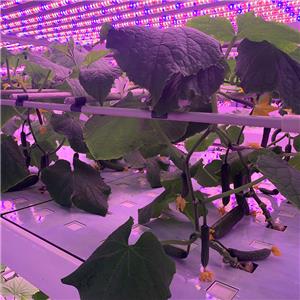
Beijing's Pinggu Launches 'Super Plant Factory' for Year-Round Strawberries
A RMB 108 million commercial strawberry plant factory has broken ground in Beijing's Pinggu district, aiming to supply Beijing-grown strawberries 365 days a year, with pre-signed sales channels and a full chain from breeding to brand operation.
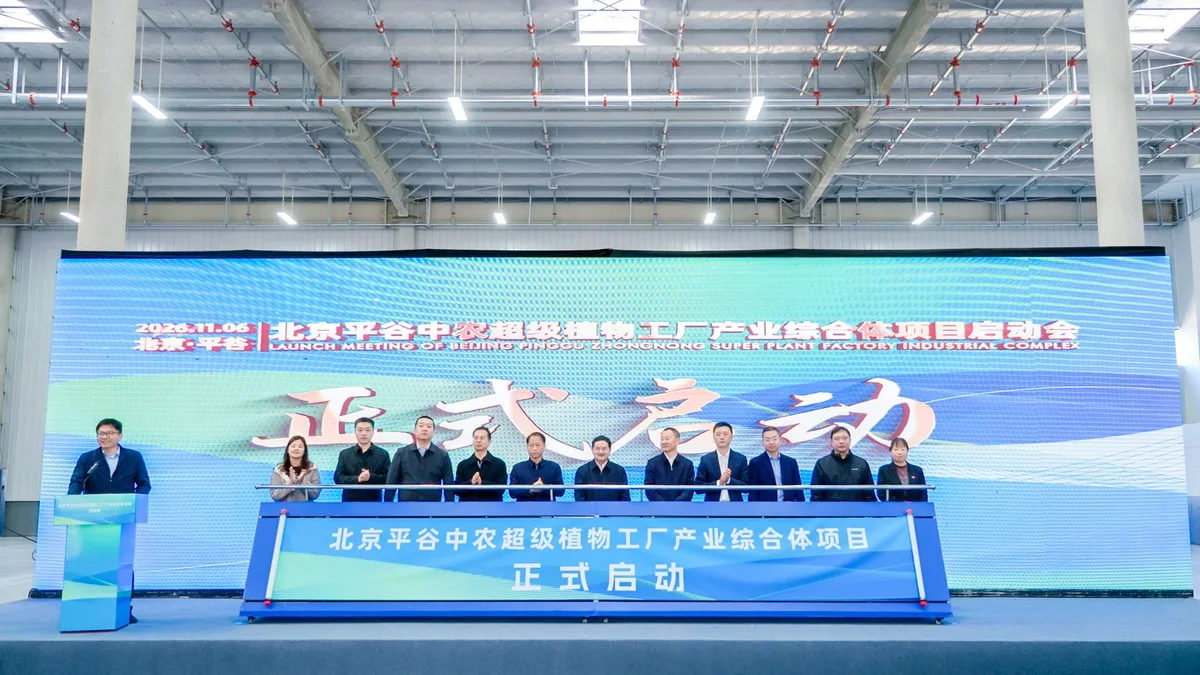
The Zhongnong Super Plant Factory Industrial Complex broke ground on 6 November 2026 in Xiagezhuang town, Pinggu district, in north-eastern Beijing. With a total investment of RMB 108 million, the project will become a commercial strawberry plant factory supplying Beijing-grown strawberries 365 days a year.
Yang Qichang, a researcher at the Chinese Academy of Agricultural Sciences' Institute of Urban Agriculture and an academician of the International Eurasian Academy of Sciences, said factory-based, intelligent and vertical planting is an inevitable trend in modern agriculture and an important way to break through seasonal and land constraints and secure a stable year-round supply of quality agricultural products. He described the project as a benchmark for deepening cooperation between the academy and Pinggu and for commercialising agricultural research.
The investor and builder, Beijing Lianfu Yixiang Agricultural Development Co., Ltd., signed cooperation and intended procurement agreements at the launch meeting with South Korea's FIRMMIT Co., Ltd., the China-Russia International Agricultural Products Trading Center and Beijing Tachongjia Technology Co., Ltd. Wanda, Meituan and other retail platforms, as well as local agricultural operators, were also invited to help expand future sales channels.
The project will focus on strawberries and build a full industry chain covering variety research and development, seedling breeding, intelligent planting and brand operation, mainly targeting the high-end fresh fruit market in the Beijing-Tianjin-Hebei region. During China's 15th Five-Year Plan period (2026-2030), Pinggu plans to further develop its Agricultural Zhongguancun zone and promote the application of more agricultural research achievements.
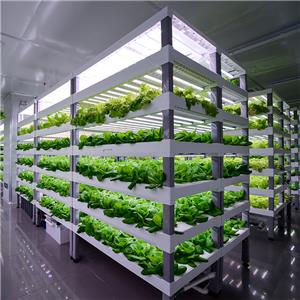
The Pinggu project is notable for two reasons. First, it bets a plant factory on strawberries — a high-value fruit crop — rather than the leafy greens that dominate most commercial plant factories, a sign that plant-factory economics are being tested on higher-margin produce. Second, it locks in buyers before the first harvest: pre-signed procurement agreements and retail partners are meant to remove the offtake risk that has sunk many indoor farms. Growers weighing the same question can compare system options, from RADIX hydroponic modules for leafy greens to the ARK container farm for modular, relocatable production.
---
Frequently Asked Questions
What is being built in Pinggu, and how big is the investment?
The Zhongnong Super Plant Factory Industrial Complex broke ground on 6 November 2026 in Xiagezhuang town, Pinggu district, in north-eastern Beijing. With a total investment of RMB 108 million, it will become a commercial strawberry plant factory supplying Beijing-grown strawberries 365 days a year.
Who is behind the project?
The investor and builder is Beijing Lianfu Yixiang Agricultural Development Co., Ltd., which signed cooperation and intended procurement agreements at the launch meeting with South Korea's FIRMMIT Co., Ltd., the China-Russia International Agricultural Products Trading Center and Beijing Tachongjia Technology Co., Ltd.
Why focus on strawberries instead of leafy greens?
The project bets a plant factory on strawberries — a high-value fruit crop — rather than the leafy greens that dominate most commercial plant factories, a sign that plant-factory economics are being tested on higher-margin produce.
Which market is the project targeting?
It will build a full industry chain covering variety research and development, seedling breeding, intelligent planting and brand operation, mainly targeting the high-end fresh fruit market in the Beijing-Tianjin-Hebei region.
How are buyers secured before the first harvest?
Pre-signed procurement agreements and retail partners — including Wanda, Meituan and other retail platforms invited to help expand future sales channels — are meant to remove the offtake risk that has sunk many indoor farms.