Biobest Launches Polly, an Autonomous Pollination Robot for Tomato Greenhouses
Biobest and Arugga AI Farming have launched Polly, an autonomous pollination robot for commercial tomato greenhouses that covers about one hectare per unit and lifted yields 2–6% in trials.
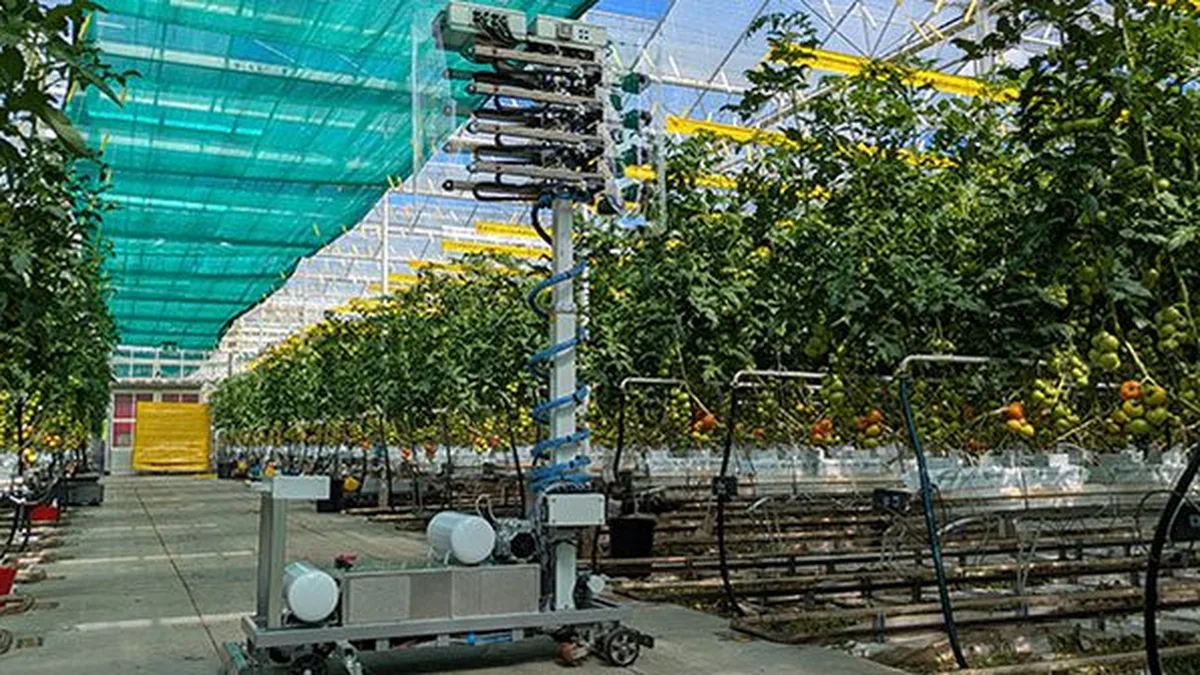
Biobest, part of Belgium's BioFirst Group, launched Polly on 18 November 2026 — a fully autonomous pollination robot for commercial tomato greenhouses, built with Israeli agtech company Arugga AI Farming after a five-year development partnership. One robot now covers roughly one hectare without continuous human supervision.
Polly uses cameras and image recognition to scan individual flowers and identify which ones are ready for pollination. When it finds one, it fires a controlled burst of air at the flower to release pollen, mimicking the vibration bumblebees create when they land and buzz. The robot is designed to work alongside bumblebee colonies rather than replace them. It fills in when bees go quiet — during short winter days under supplementary LED lighting, when energy-saving thermal screens cut light further, or in summer heat above 35°C when bee activity drops off.
Trials across European and North American commercial greenhouses showed yield improvements of 2% to 6%. That range matters commercially because an increase of just 1.5% is typically enough for a grower to recoup the cost of the technology. "They provide an additional layer of pollination security, helping maintain consistent pollination even when environmental conditions limit bumblebee activity," said Jorden van de Walle, Biobest's product manager for pollination.
Biobest is offering Polly through 12-month leasing agreements as well as outright purchase, both including maintenance and warranty support, letting growers test the economics before committing capital. Given Biobest's existing distribution network for biological pest control and pollination products in greenhouse regions worldwide, the company is positioned to scale Polly deployments quickly wherever its bumblebee hives already ship. The next test will be whether the 2–6% yield range holds up across a wider set of climates and tomato varieties as more growers adopt the robot outside the original trial sites.
For controlled-environment growers, Polly highlights a side effect of energy-efficient greenhouse design: thermal screens and LED supplementation save energy but create exactly the low-light conditions in which bees slow down, just when crops need consistent pollination. Automation that tops up biological pollination at the margins — rather than replacing it — is becoming part of the package alongside LED grow lighting strategies that tune the light spectrum by growth stage.